The last couple of years feel different in the way companies are responding (or not responding) to sensitive social issues that are important to employees and customers. The Financial Times published an article in March 2022 titled, When should business take a stand? In the same month, Politco published a piece called, Inside the Progressive Movement’s TikTok Army. In the past, employees and customers were not very vocal when companies and brands made decisions that violated their values. Something shifted in the past couple of years. Today, employees and customers expect companies and brands to take a stand on complex political, social, and moral issues. I think the shift is being led by Gen Z coupled with the immediacy of the Internet.

Earlier this year, Starbucks surveilled and fired several employees who were involved in a unionization effort. After the firings, Gen-Z for Change, a non-profit that uses social media to create change, asked their TikTok army of activists to flood Starbucks with 88,000 fake job applications. A long-time Starbucks executive, who opposed the unionization resigned in June.
Brands looking to appeal to Gen Z need to be fun, authentic, and good. In a 2020 study by The Center for Generational Kinetics and commissioned by WP Engine, a majority of Gen Z expect the following from brands:
Be fun. 65% of Gen Z goes to the Internet for access to entertainmentBe authentic. 82% of Gen Z trusts a company more if the images they use in their ads are of actual customersBe good. 72% of Gen Z is more likely to buy from a company that contributes to social causes
The consulting firm, McKinsey published their Consumer Pulse survey in May 2022. They found the biggest concern for younger consumers is that:
"companies are transparent and show that they care for people (employees, customers, others in their communities)…younger consumers prioritize authenticity and social issues such as diversity, equity, and inclusion.”
Twitter published research in June 2022 showing that their users, especially Gen Z, expect brands to take a public stand on serious issues:
“When it comes to serious matters, such as racial justice, gender equality, and climate change, people on Twitter not only welcome brands into these conversations but expect them to speak up on behalf of their followers and others who share their values.”
The New Era of Corporate Political Responsibility: Let's compare reactions by brands to two racial events in the US. In 2014, Michael Brown, a black teenager was killed in Ferguson, Missouri by a white police officer, who was not charged. Brands remained silent despite unrest and protests. In 2020, George Floyd was killed by a police officer, Derek Chauvin, in 2020 in Minneapolis, Minnesota. Corporate executives in America and Canada were quick to make public statements expressing strong opinions about injustice before and after Chauvin was convicted.

Elizabeth Doty, the director of the corporate political responsibility task force at the Erb Institute, University of Michigan describes the shift over the past 5 years as “remarkable”. She says companies today are:
"shell-shocked by the frequency of need and the ballooning requests to engage”.
In a time of increasing racial injustice, gender equality, war, and economic inequity, this period is being called the new era of "corporate political responsibility".
For brands, the risk of not speaking out quickly is far greater than remaining silent. Expect consumers, led by Gen Z, to continue to hold companies accountable for communicating their values and purpose based on being good, authentic, and fun.
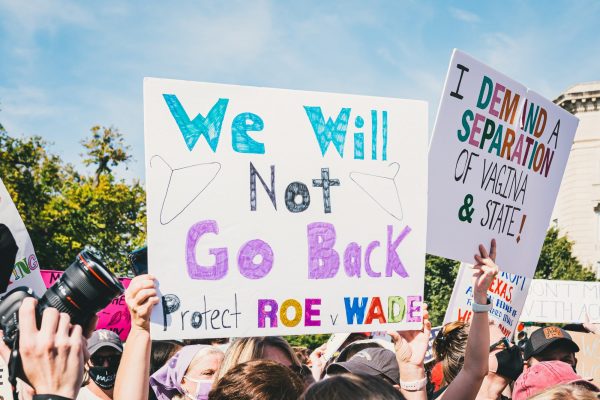
Online creators speak out after Roe v Wade overturned
After Roe v Wade was overturned, Canadian TikTokers responded with support. They used the hashtag #wegodowntogether to let Americans seeking abortions in Canada that their doors were open. One TikToker posted,
If you want to come ‘see my cows’ for the weekend let me know. I can give you a safe space while you recover from ‘seeing my cows.
While well-intentioned, Jill Doctoroff, executive director of National Abortion Federation Canada, said,
"Travelling to Canada isn't a viable option for the marginalized Americans who will be most impacted by abortion bans…Those who can afford to come north of the border for an abortion would likely prefer to be put up in a paid hotel room than stay in a stranger's home."
What's noteworthy about Gen Z is that their identity is shaped by their personal conversations in-person and online. Ioana Literat, a researcher who studies youth political participation on social media, says,
"TikTok is such a fitting space for those discussions because political expression on TikTok is quintessentially personal.”
Most observers see TikTok as a fun light-hearted platform. But Gen Z who have had to deal with climate change, gun control, racial justice, the pandemic and now Roe v. Wade are increasingly becoming activists and sharing their views with their followers on social media platforms. After the Supreme Court's ruling, hashtags like like #roevwade, #womensrights, #abortion, #prochoice, and #prolife received billions of views.
Gen-Z for Change is a non-profit led by young people. It uses social media to educate, encourage and mobilize civic participation, shift the political debate, and enact change. It has created a coalition of about 500 progressive social media influencers covering the Internet's most trafficked social media platforms. Their influence represents about 500 million followers, about 100 times higher than US cable networks. Olivia Julianna, who is Gen-Z for Change's political strategist posted a video on TikTok in September 2021. She encouraged followers to send fake tips to an anti-abortion whistleblower line in Texas. The line allowed Texans to report suspected violations of the state's new six-week abortion ban that became law in early 2021. The line was forced to shut down after being overwhelmed with fake memes.